

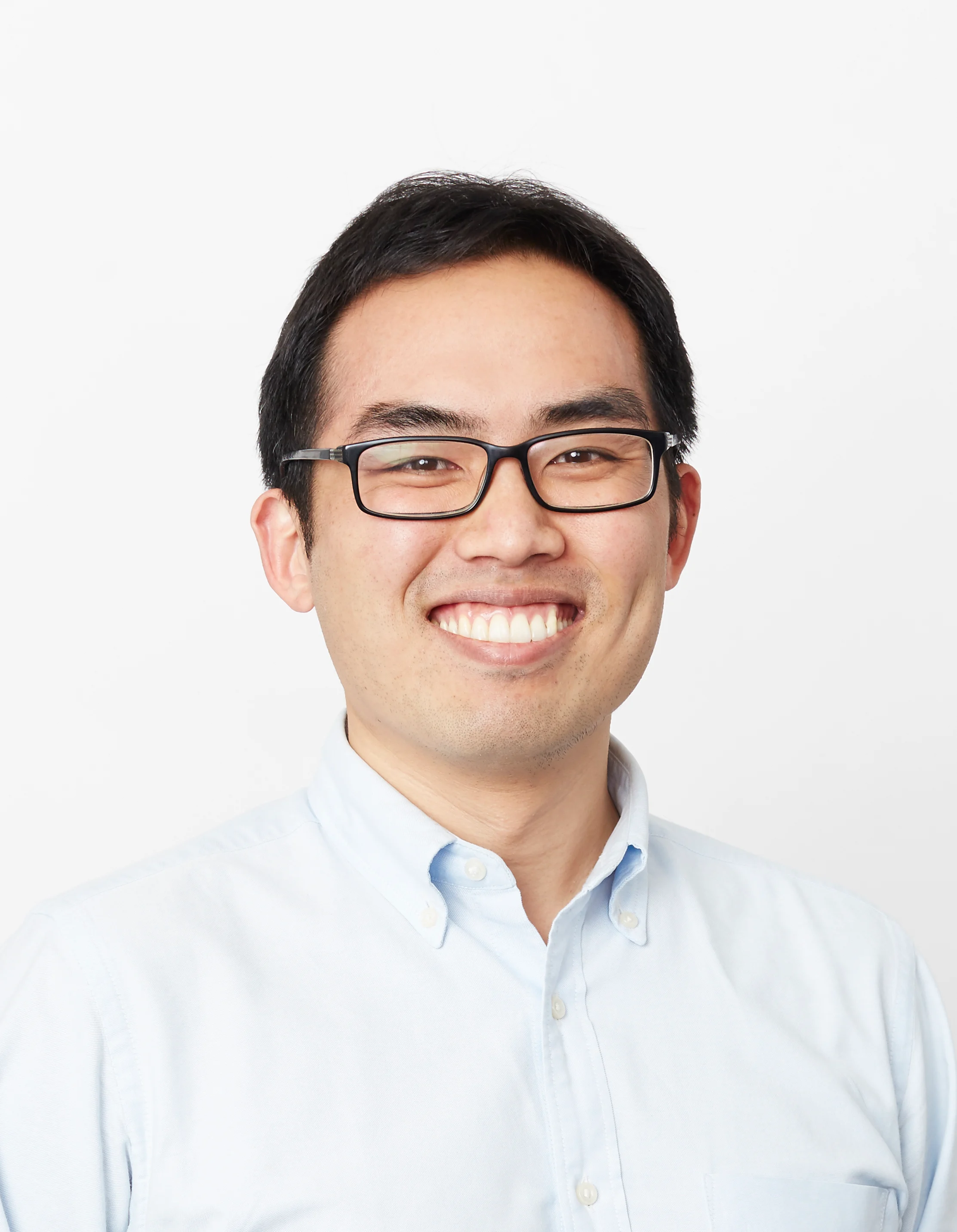
Member Spotlight: Q&A with James Lu, Co-Founder & CEO of Helix
19 February 2026
Can you tell us about Helix and your role there?
Helix is a population genomics company focused on improving clinical outcomes and enhancing healthcare delivery through the strategic application of genomic medicine. We partner with major healthcare systems, payers, and life sciences companies across the full spectrum of care delivery, drug discovery, and cost reduction initiatives. Our core strength lies in our ability to leverage genomic data as a key insight into healthcare—offering testing services, data services, and enabling novel use cases in genetics.
Helix operates in partnership with its major healthcare system collaborators through the Helix Research Network, the largest clinical precision medicine research network in the world. By systematically combining medical records, claims data, and genomics, we enable large-scale discovery across all therapeutic areas—from foundational science to translational research.
What motivated Helix to join CHAI?
We had been following CHAI for some time. AI is one of the most important themes shaping the future of healthcare over the next decade. Helix sees CHAI’s role as critical to help define how AI is implemented responsibly—with a focus on accuracy, transparency, and robustness. As both a large-scale data generator and one of the largest clinical sequencing lab operators in the country, we’re deeply invested in getting this right.
How does Helix foster transparency and trust with clinical partners when implementing AI solutions?
It’s a balance of internal and external efforts. Internally, we emphasize demonstrating and benchmarking accuracy, usefulness, and reproducibility across sites and over time. Externally, it’s about communicating clearly with partners so results remain consistent in real-world settings. We treat AI evaluation similarly to laboratory validation—it must be analytically valid, clinically meaningful, and repeatable.
What most excites you about AI and genomics?
I am excited by the productivity gains– using AI to streamline access to genetic information, improve clinical workflow efficiency, and expand research opportunities for non-technical investigators. I am also excited about enhanced discovery– using AI to drive novel diagnostics and insights. The ability to integrate multimodal data and interpret it through unified architectures is transformative. For instance, recent work such as the Delphi paper in Nature shows how transformer models can predict disease onset and timing—underscoring how far we’ve come in linking information content to meaningful outcomes.
How does Helix mitigate the risks of using AI in clinical workflows?
It starts with differentiating what should be deterministic versus probabilistic. Too often, AI is applied where simpler automation would suffice. For deterministic processes, traditional computing methods may yield more reliable results. For probabilistic tasks, we refine our models to limit unnecessary variance and uncertainty. The key is precision in knowing when and how to apply AI appropriately.
Where do you see potential for fundamental breakthroughs in genomics and AI—particularly in areas not yet widely explored?
One area of tremendous potential is building the right business models to properly capture value from predictive and preventive insights delivered by AI. In the U.S., preventive healthcare often lacks reimbursement models. You could develop a tool capable of predicting cancer onset years in advance, but if the system doesn’t pay for prevention, there’s limited value capture despite enormous value creation. Aligning technology innovation with sustainable financial incentives is essential for meaningful impact, and getting this right has tremendous potential to transform healthcare over the next decade.
Any final thoughts?
We’re excited to deepen our engagement with CHAI and participate in upcoming meetings. We expect this partnership will open new opportunities to advance genomic and AI-driven insights responsibly and effectively and look forward to what is to come.